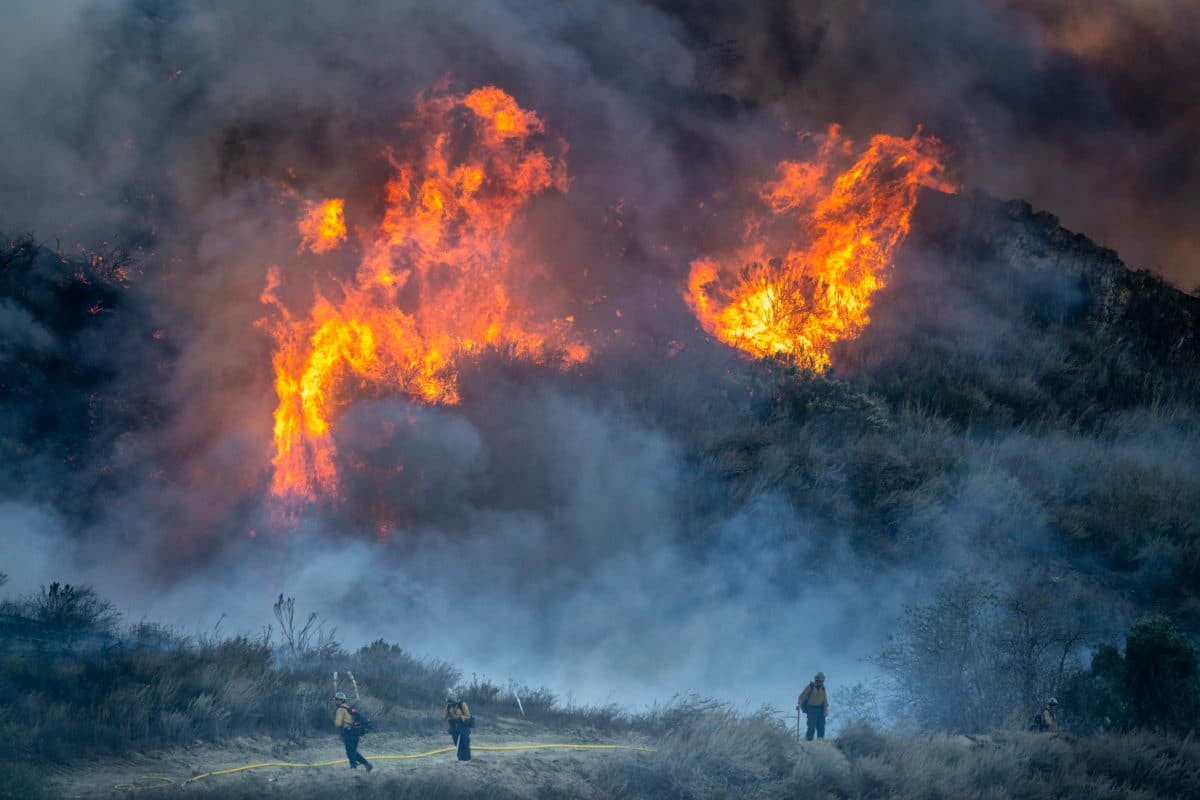
In November of 2018, the entire town of Paradise, California was consumed by the flames of a wildfire which started 12 miles away. Eventually it reached the urban area where it claimed the lives of five firefighters and 85 residents, as well as engulfing thousands of buildings and infrastructure within the town. The Camp Fire engulfed 153,336 acres and bankrupted the Pacific Gas and Energy company, costing an estimated $16 billion.
The fire that consumed the town of Paradise is not an outlier. Wildfires like these are becoming increasingly common due to a combination of factors including: climate extremes, aging utility infrastructure, and accumulation of combustible fuels. Rising temperatures and prolonged drought conditions combined with ignitions from electrical lines can trigger a catastrophic wildfire. Extended drought and high winds contribute to fuel curing and wildfire spread. A century of fire suppression and land management practices creates an abundance of fuel increasing wildfire severity.
The fire that consumed the town of Paradise is not an outlier
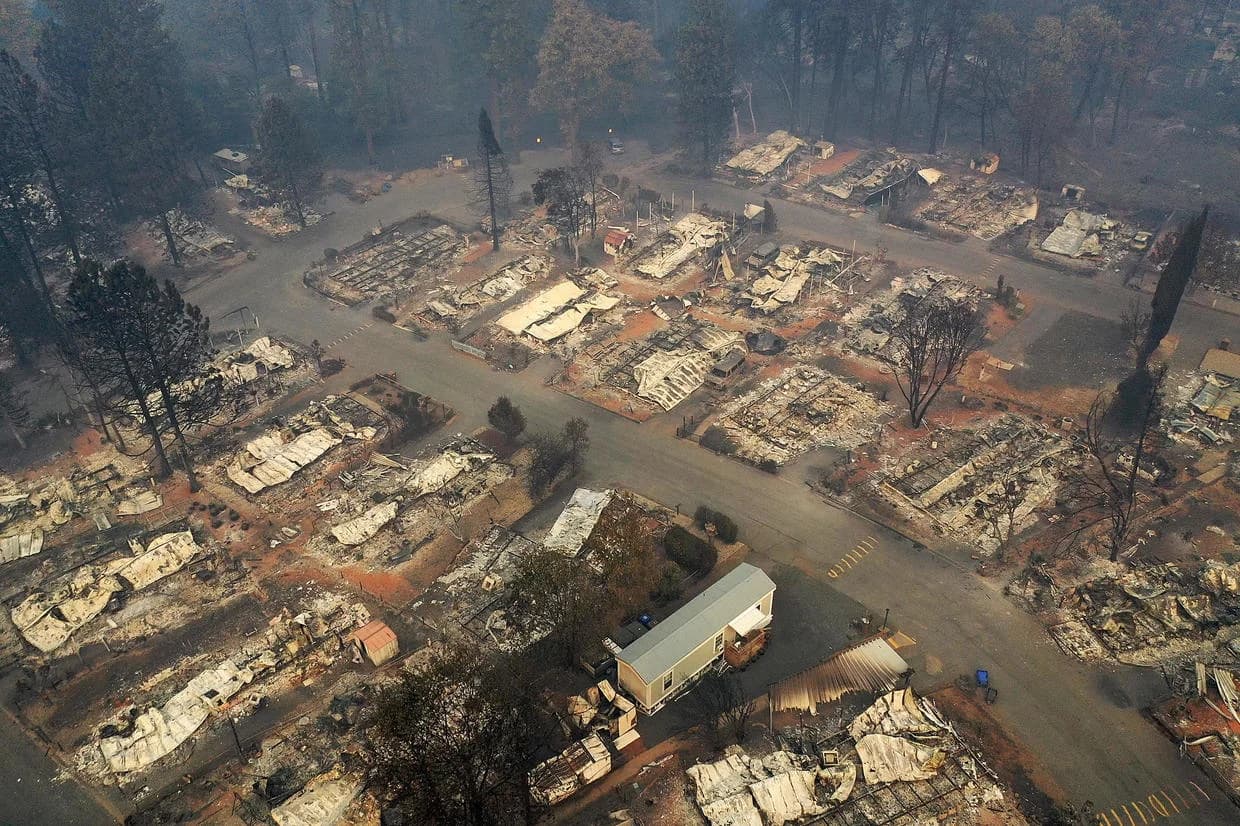
One of the many neighborhoods destroyed by the Camp Fire in 2018.
Photo: Justin Sullivan, Getty Images
Wildfires in Unexpected Places and Times
It is important to recognize that the Marshall Fire began in winter, a season not typically associated with wildfire, particularly in Colorado. Unusual weather conditions paired with a landscape ready to burn, are growing more common. The need for land management and electric grid maintenance to prevent fires is urgent. The threat of wildfire is not only present in California and Colorado, but is increasing across the U.S.
Wildfires are occurring in locations not usually associated with wildfires, year after year
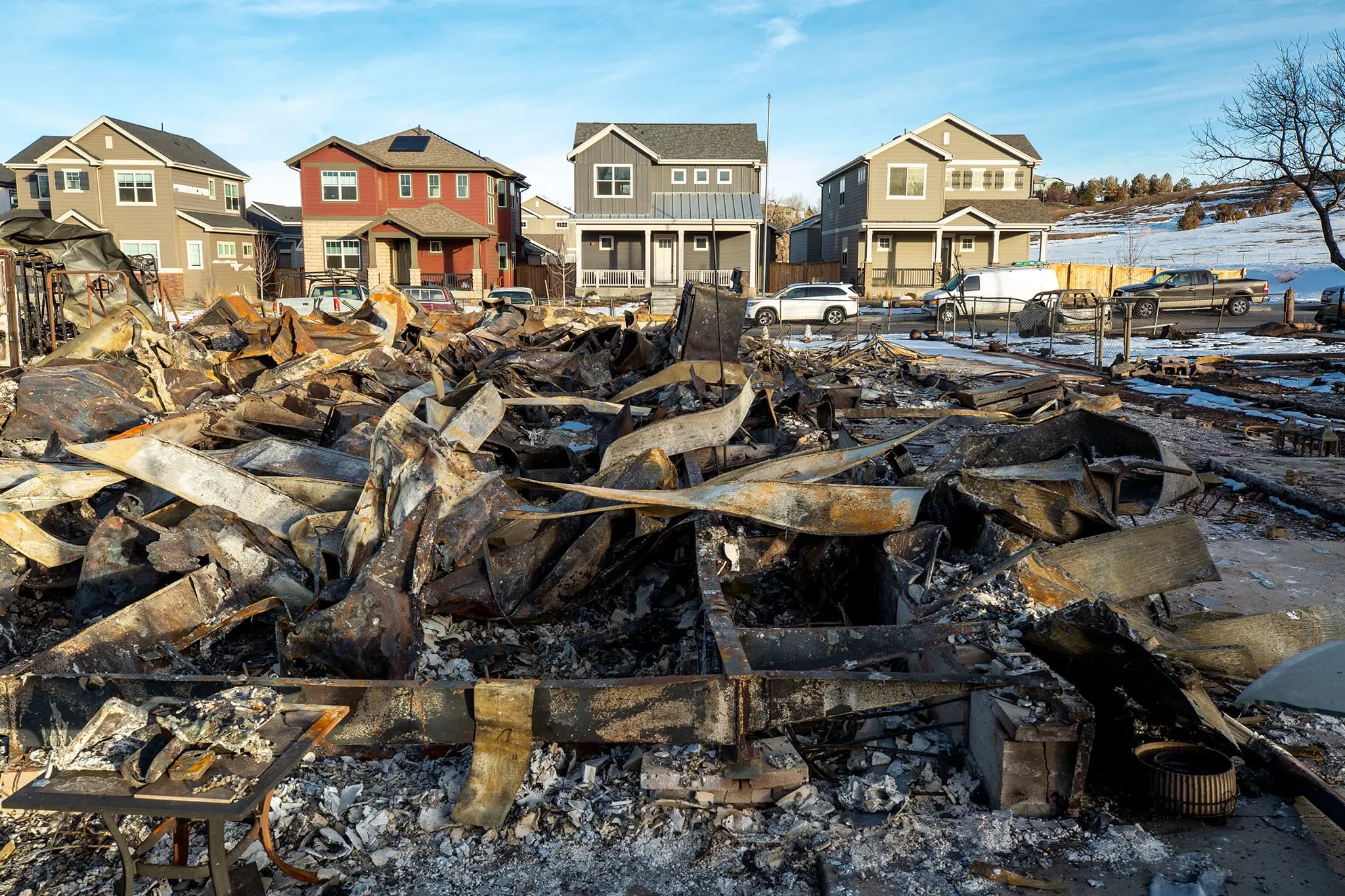
Aftermath of the Marshall Fire, which was started by a broken power line.
Photo: Kevin J. Beaty, Denverite
The Lahaina Fire
The town of Lahaina on the Hawaiian Island of Maui was also affected by the alignment of drought, strong winds, dense dry vegetation and mismanagement of electrical equipment. On the night of August 8th, 2023, a spark from a broken power line ignited surrounding vegetation. The fire resulted in 102 fatalities, as well as 2,000 homes burnt. The fire resulted in a $4 billion settlement between Hawaiian electric and land management companies, and the reparations of houses and commercial buildings is still ongoing nearly a year and a half later. The drought and high wind speeds that created such a monstrous wildfire are another example of how changing climatic conditions can lead to catastrophic fire when there is the spark to light it.
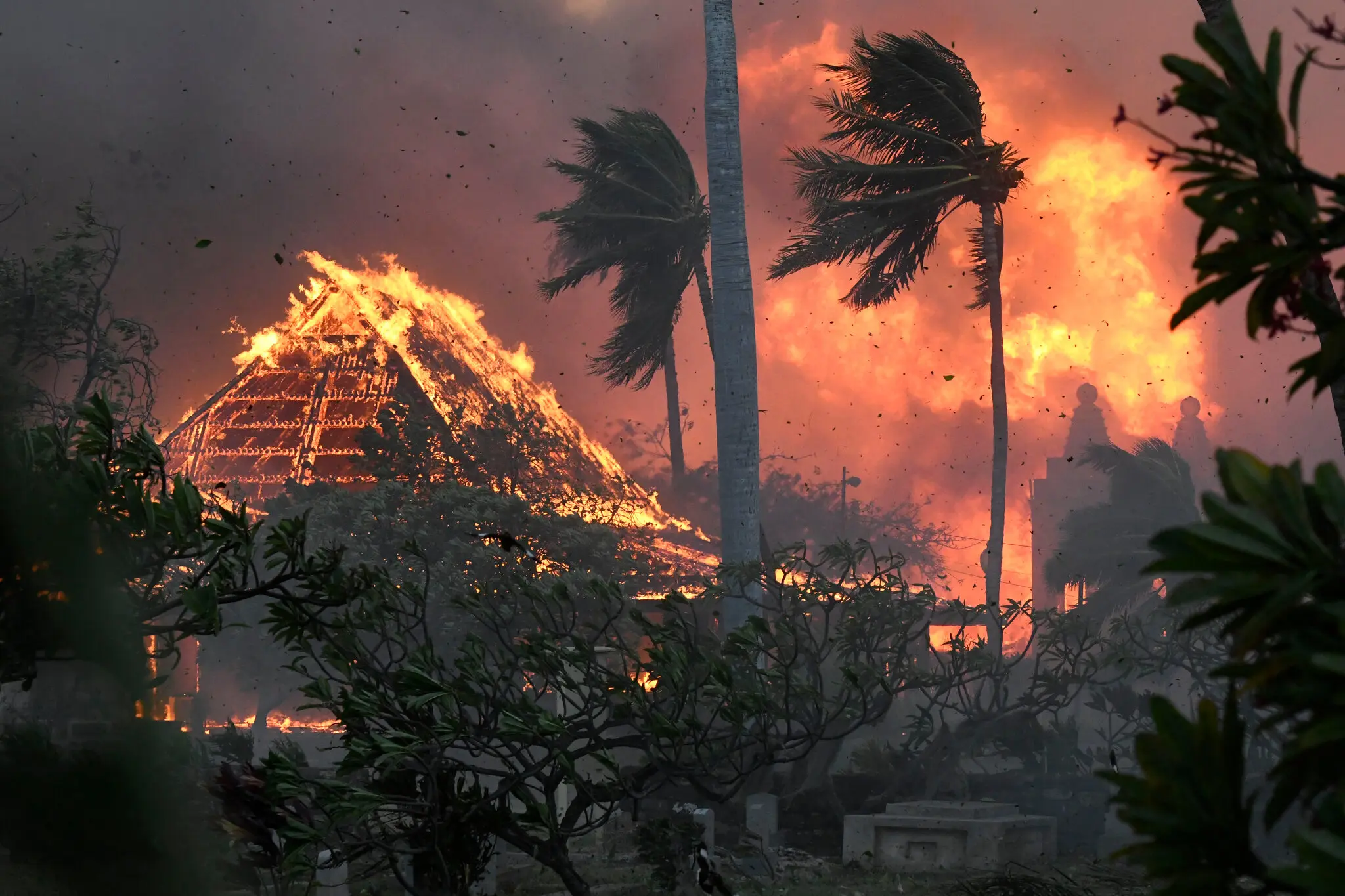
The Waiola Church hall in Lahaina was destroyed in the Lahaina Fires in 2023.
Photo: Matthew Thayer, Maui News
Firescape's Platform: A Toolbox for Utilities
Firescape Inc., a company based in Albuquerque, New Mexico, is taking the initiative to predict fire conditions and help utilities stop them before they even begin. Using satellite imagery and data from over 50 sources including weather, vegetation density, and infrastructure data, Firescape's software program leverages advanced AI algorithms to predict wildfire potential, weather conditions, and "hotspots" where communities would be most affected by wildfires.
By assessing impact of the fires from an electric grid asset, Firescape can model what mitigation would be most effective at reducing wildfire consequence. Firescape's platform provides two key areas of support for utilities: daily operational insights and long-term strategic planning.
Key Platform Capabilities:
- Daily Risk Assessment: Real-time monitoring of wildfire conditions and risk levels
- Mitigation Planning: Identify optimal wildfire mitigation strategies
- Impact Modeling: Predict wildfire potential and acres burnt
- Grid Hardening: Recommendations for covered conductors, pole wrapping, and fault interrupters
- Vegetation Management: Prioritize thinning along right-of-way corridors
Mitigation types include grid hardening measures such as covered conductors, pole wrapping and installation of fault interrupters, as well as vegetation thinning along right-of-way corridors and fuels thinning along surrounding lands. Firescape predicts wildfires' impact on utility equipment and acres burnt, helping utilities determine the most optimized wildfire mitigation strategy.
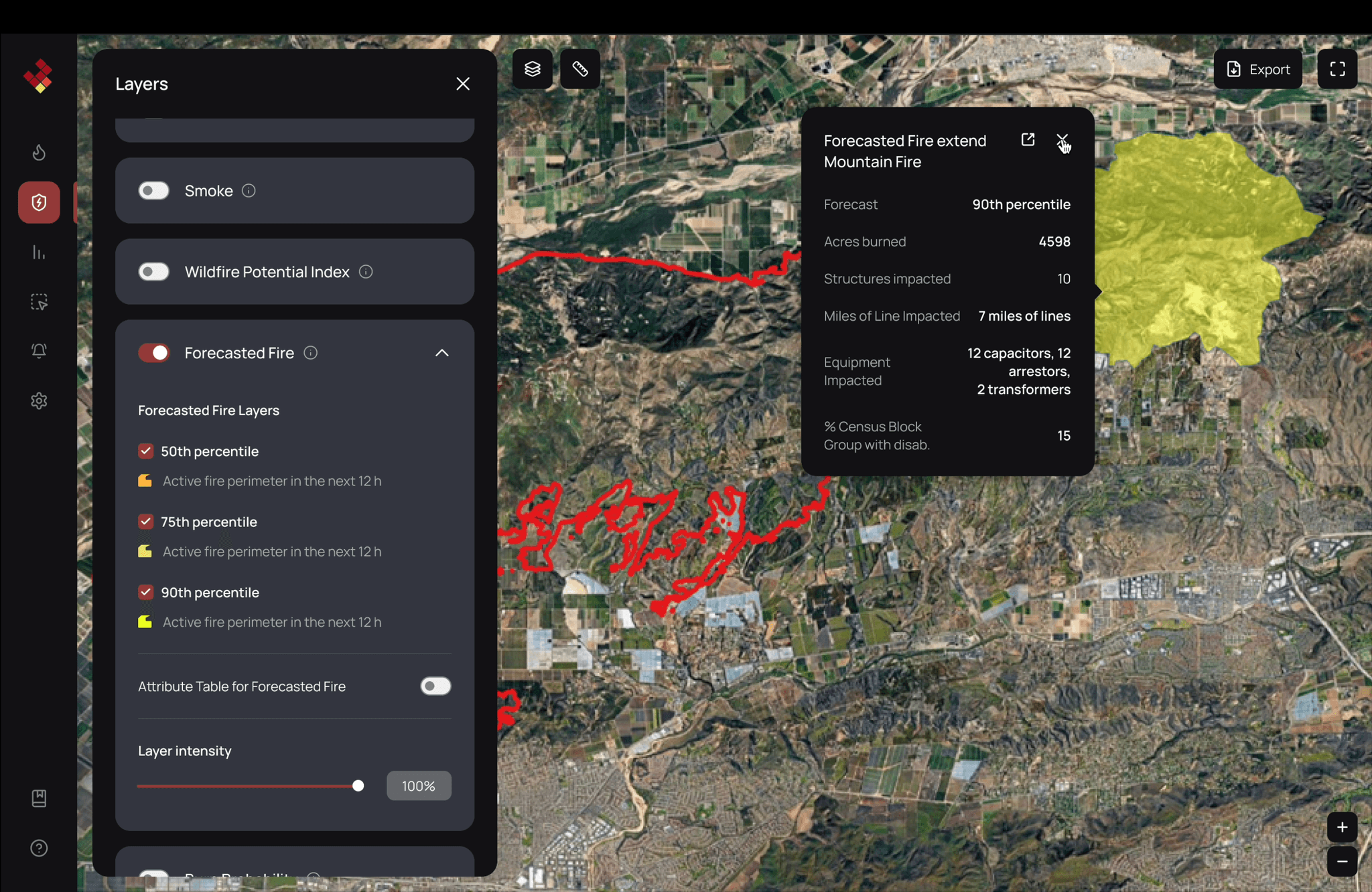
Firescape predicts wildfires' impact on utility equipment and acres burnt.
Ready to Enhance Your Wildfire Risk Management?
Learn how Firescape can help your utility proactively manage wildfire risk and protect the communities you serve.
Get a Demo